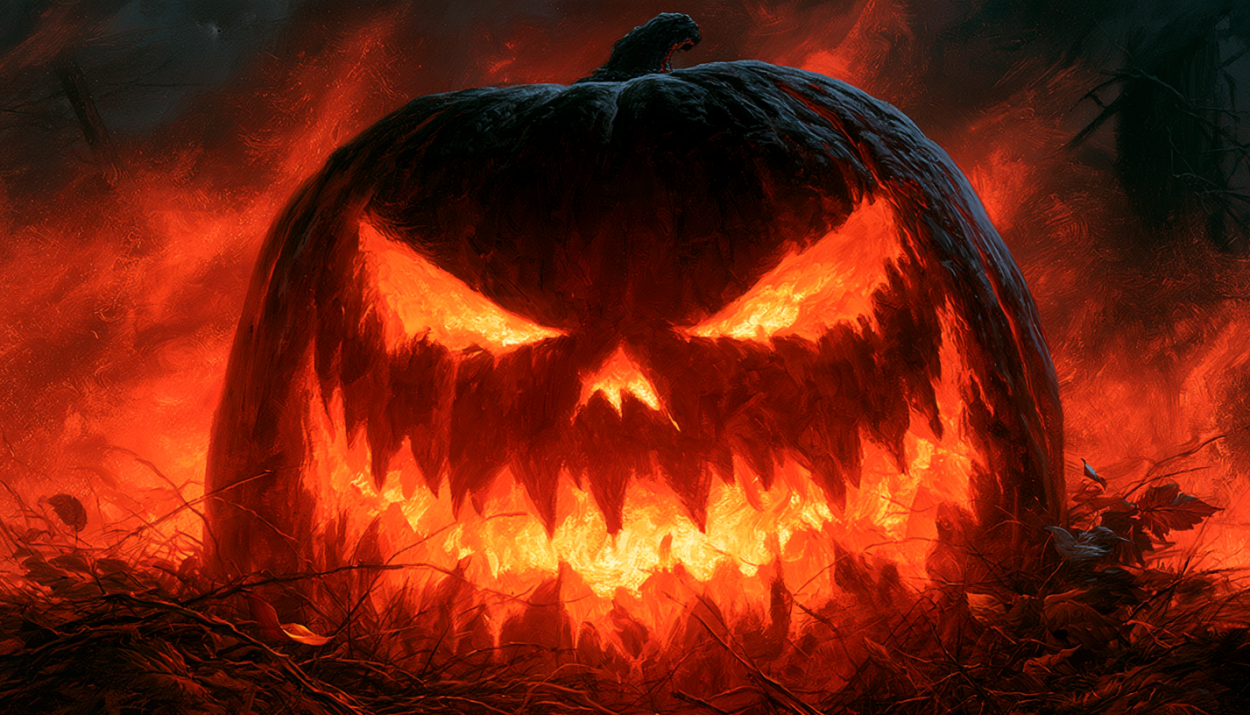
Of all the images associated with Halloween—witches, skeletons, black cats, ghosts and goblins—few are as instantly recognisable as the grinning face of a jack-o’-lantern.
Every autumn, carved pumpkins appear on doorsteps, in windows and outside homes, their flickering faces becoming one of the defining symbols of Halloween. But how did a hollowed-out vegetable, illuminated by a candle and carved with a grotesque face, become such an enduring part of the holiday?
The story stretches back centuries, crossing the Atlantic and drawing on a mixture of Irish folklore, Celtic traditions and later American customs. And although pumpkins have become synonymous with the jack-o’-lantern, they were not the vegetable originally used.
To understand where the tradition began, we have to travel back to Ireland and Britain, long before Halloween became the commercial and cultural phenomenon it is today.
The Legend of Stingy Jack
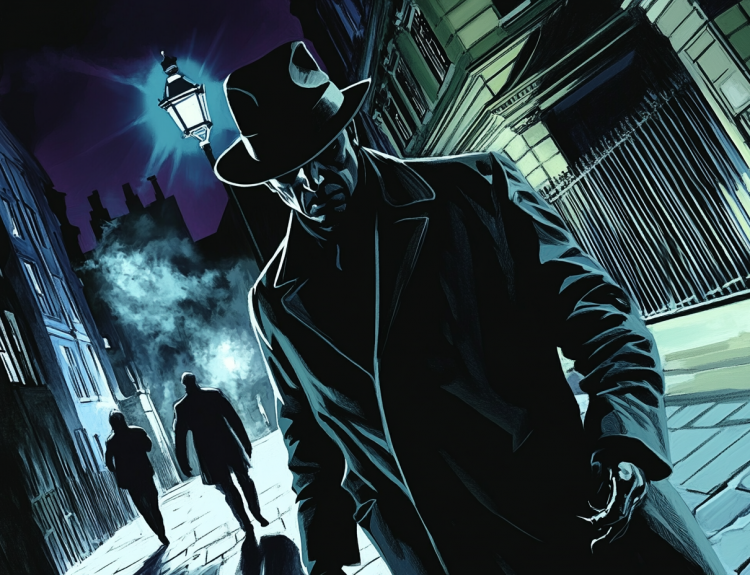
At the heart of the jack-o’-lantern tradition is the Irish folk tale of Stingy Jack, a character whose story was passed down through generations in various forms.
Jack was said to be a cunning and unpleasant man who repeatedly managed to outwit the Devil himself.
In one version of the tale, Jack persuaded the Devil to climb a tree and then placed crosses around its base, preventing him from climbing down. In another, Jack tricked the Devil into agreeing that he would never claim Jack’s soul.
Whatever the version, Jack’s cleverness ultimately failed to save him.
When Jack died, according to the legend, he was refused entry to Heaven because of his wicked life. But the Devil, remembering Jack’s tricks, would not admit him to Hell either.
Instead, Jack was condemned to wander through the darkness between the two realms.
The Devil supposedly gave him a burning coal to light his way. Jack placed the glowing ember inside a hollowed-out turnip, creating a crude lantern with which to illuminate his endless journey.
The figure became known as “Jack of the Lantern”, a name that eventually evolved into “jack-o’-lantern”.
There is, of course, no evidence that Stingy Jack was a real historical figure. The story belongs to the realm of folklore, with its precise origins obscured by centuries of oral tradition.
Nevertheless, the legend provides a compelling explanation for the name and imagery that would eventually become associated with the Halloween lantern.
But the story of Stingy Jack is only part of the tradition.
The practice of carving faces into vegetables has its own, much older history.
The Festival of Samhain
Long before pumpkins became synonymous with Halloween, people in Ireland and parts of Britain were carving and hollowing out vegetables such as turnips, beets and potatoes.
These vegetables were considerably smaller than pumpkins, but they could still be hollowed out and fitted with candles or other sources of light.
Such practices became associated with the autumn festival of Samhain, an ancient Celtic seasonal festival marking the transition from summer into winter.
Samhain traditionally took place around the end of October and beginning of November, a significant period in the agricultural calendar. The harvest had been gathered, winter was approaching and communities came together for seasonal celebrations.
Over time, customs surrounding Samhain became intertwined with Christian observances.
All Saints’ Day was celebrated on November 1, while All Souls’ Day followed on November 2. The evening before All Saints’ Day became known as All Hallows’ Eve—eventually shortened to Halloween.
As these traditions evolved and overlapped, older seasonal customs survived in new forms.
Among them was the practice of hollowing out vegetables and carving faces into them.
Whether intended as symbolic objects, sources of light or frightening decorations, the carved vegetables became part of the folklore surrounding the autumn celebrations.
Their appearance at night could be particularly striking. A candle glowing through the eyes and mouth of a crudely carved turnip could transform an otherwise ordinary vegetable into something eerie and unsettling.
For communities accustomed to long, dark autumn evenings, the tradition was both practical and atmospheric.
Yet for centuries, it remained largely a custom of Ireland and parts of Britain.
Then it crossed the Atlantic.
The Crossing of the Atlantic
During the 19th century, large numbers of Irish immigrants travelled to North America, particularly during and after the Irish Potato Famine.
They brought with them their customs, folklore and seasonal traditions—including those associated with Halloween.
In America, however, they encountered a vegetable that would transform the jack-o’-lantern forever: the pumpkin.
Pumpkins were already native to North America and had long been cultivated by Indigenous peoples. For the newcomers, they proved to be remarkably well suited to the tradition of vegetable carving.
Compared with turnips, potatoes and beets, pumpkins were larger, easier to hollow out and considerably easier to carve. Their size also allowed for larger and more elaborate designs.
The transformation was almost inevitable.
The turnip became the pumpkin, and an old European tradition acquired a distinctly American appearance.
The familiar orange pumpkin eventually became one of the defining symbols of Halloween.
From Simple Lanterns to Grinning Faces
The earliest carved lanterns did not necessarily resemble the elaborate jack-o’-lanterns we recognise today.
Early designs could be relatively simple, with crude faces, geometric patterns or other shapes cut into the vegetable. The purpose was as much practical as decorative: a hollowed-out vegetable containing a candle could provide a small source of light while also creating an eerie effect.
Over time, however, the designs became increasingly imaginative.
Faces developed exaggerated eyes, jagged teeth and sinister or comical expressions. The pumpkin’s naturally rounded shape provided an ideal canvas for increasingly elaborate carvings.
Eventually, the grotesque grin became one of Halloween’s most recognisable visual symbols.
What had once been a simple vegetable lantern had evolved into an art form.
The Jack-o’-Lantern Goes Mainstream
The popularity of Halloween in the United States helped transform the jack-o’-lantern from a regional folk tradition into an internationally recognised symbol.
By the late 19th and early 20th centuries, Halloween celebrations were becoming increasingly popular, with decorations, costumes, parties and printed cards helping to establish a more standardised image of the holiday.
Newspapers, magazines, advertising and eventually radio and television carried Halloween imagery into millions of homes.
The jack-o’-lantern was perfectly suited to this new cultural landscape.
It was inexpensive, visually striking and easy for families to recreate.
As Halloween became increasingly commercialised, pumpkins appeared everywhere—from front porches and shop windows to parties, community events and later television screens.
The tradition also evolved alongside technology.
The traditional candle remains popular, but modern jack-o’-lanterns can now be illuminated with battery-powered lights, LEDs and other alternatives. Intricate carving tools have made it possible to create designs far more elaborate than the crude faces of earlier generations.
Yet the basic idea remains remarkably unchanged.
Hollow out a pumpkin. Carve a face. Add a light.
And place it outside on a dark October night.
The Jack-o’-Lantern Today
Today, the jack-o’-lantern is arguably the most recognisable symbol of Halloween.
Its history, however, is considerably more complicated than the simple pumpkin carvings seen on modern doorsteps.
The tradition represents the blending of cultures and centuries: ancient seasonal customs, Irish folklore, Christian observances, immigration and the uniquely American transformation of Halloween.
The pumpkin itself is North American, the name is rooted in an Irish legend, and the tradition of carving vegetables predates the modern Halloween we know today.
That unlikely journey helps explain why the jack-o’-lantern has endured.
What began as a humble lantern carved from a turnip eventually became a glowing pumpkin with a mischievous grin—the unmistakable face of Halloween.
So the next time you light a jack-o’-lantern, remember that you are participating in a tradition far older and stranger than the modern holiday might suggest.
Behind that familiar orange face lies a story of folklore, migration, seasonal rituals and centuries of changing customs.
And perhaps that is what makes the jack-o’-lantern such a fitting symbol for Halloween: part decoration, part folk tradition, and just mysterious enough to keep us wondering what might be lurking in the darkness beyond the candlelight.