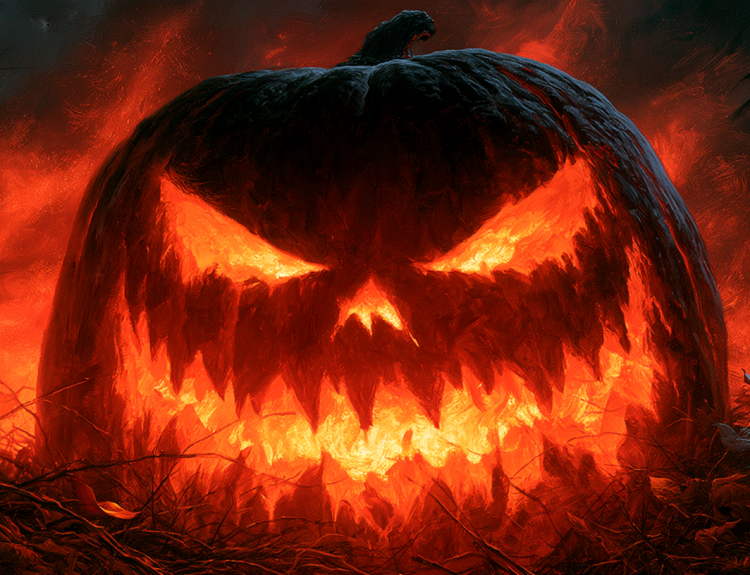
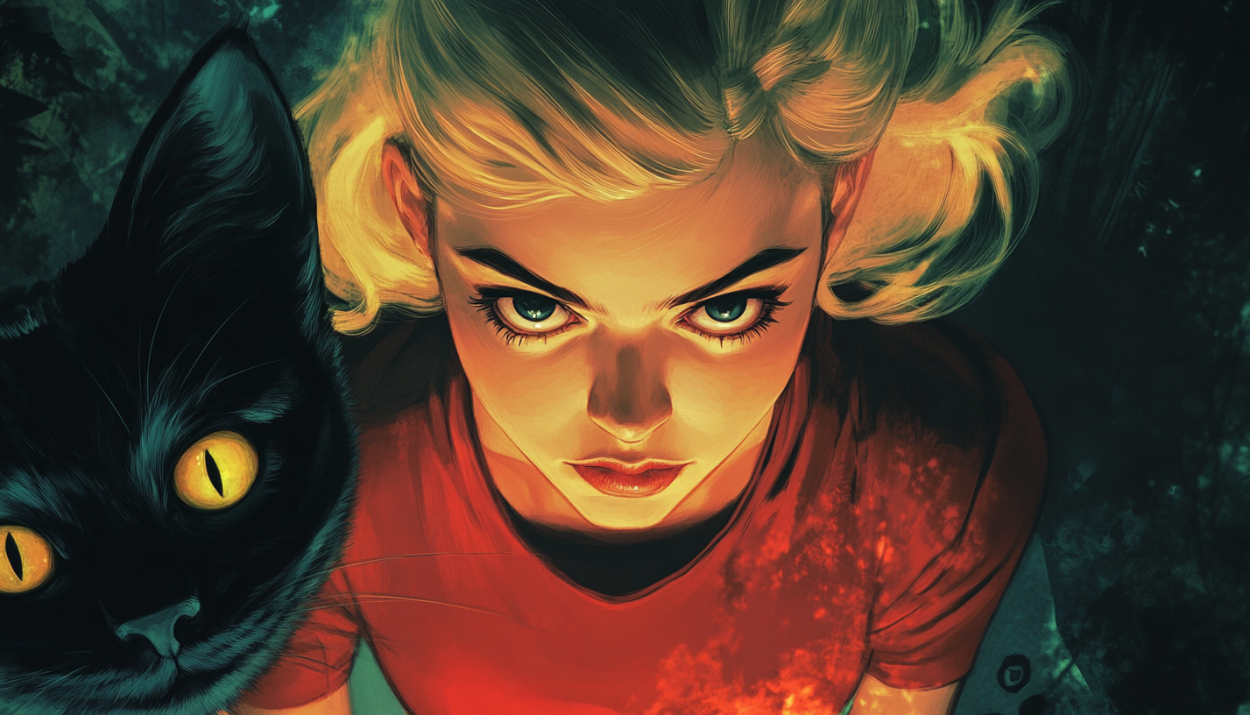
When we picture Halloween, few images are as instantly recognisable as a black cat silhouetted against a full moon. Often depicted alongside witches, broomsticks and haunted houses, the black cat has become one of the enduring symbols of the season.
Black cats are a familiar sight during Halloween, appearing on decorations, greeting cards, party invitations, and everywhere from front porches to shop windows. If you grew up in the 1990s, you may also remember Salem, the mischievous black cat from the popular American television series Sabrina the Teenage Witch.
The story stretches back centuries, long before Halloween became the celebration we know today.
Ancient Beliefs
The association between cats and the supernatural was not always one of fear. In fact, some of the earliest civilisations held cats in remarkably high regard.
In ancient Egypt, particularly during its later periods, cats were closely associated with the goddess Bastet, who was often depicted with the head of a cat or as a lioness. Cats were also valued for their practical role in protecting food stores from rodents and other pests.
They could occupy an important place within Egyptian society, and harming or killing a cat could carry serious consequences.
So how did cats — animals once revered by some ancient societies — eventually become associated with witches and dark supernatural forces?
The answer lies largely in the changing religious and cultural landscape of medieval Europe.
The Rise of Black Cats and Witches
During the Middle Ages, cats began to acquire a more complicated reputation in parts of Europe. Their nocturnal habits, independence and tendency to move silently through the darkness made them mysterious creatures to people who had little understanding of their behaviour.
Black cats were particularly striking in this regard. At night, their dark coats could make them difficult to see, while their eyes could appear to glow when illuminated by moonlight or fire.
These characteristics helped fuel the association between black cats, darkness and the unknown.
Over time, broader fears surrounding magic, superstition and supposed supernatural practices became increasingly intertwined with the image of the cat. Black cats were not necessarily feared everywhere or by everyone, but in parts of Europe they became associated with ominous events and supernatural beliefs.
The Black Death also became part of the complicated history surrounding cats in medieval Europe. The plague devastated populations across the continent, killing millions of people during the 14th century.
It is sometimes claimed that widespread killing of cats directly caused the plague to spread by allowing rat populations to increase. While this makes for a compelling piece of history, the reality is more complicated. The plague was primarily transmitted through fleas, with rodents playing an important role in the disease’s ecology, but historians caution against reducing the catastrophe to a simple story of cat persecution.
Nevertheless, fear of cats and other animals associated with darkness and superstition continued to appear in European folklore.
As beliefs about witchcraft developed and intensified, cats increasingly became connected to those accused of practising magic.
The Witch Trials
By the early modern period, the image of the witch had become firmly established within European folklore and popular belief. Witches were often portrayed as figures who possessed supernatural powers and maintained relationships with mysterious forces.
Among the beliefs that developed was the idea that witches could transform themselves into animals — or that supernatural spirits could take animal form and serve them.
This helped give rise to the concept of the familiar: a supernatural companion believed to assist a witch in carrying out magical or malicious acts.
Cats, with their independent nature and mysterious reputation, became one of the animals most commonly associated with familiars. Black cats were particularly suited to the imagery, their dark coats reinforcing their association with night, secrecy and the unknown.
From the 15th through to the 18th centuries, thousands of people across Europe and elsewhere were accused of witchcraft. Many were subjected to trials, imprisonment and execution.
One notable example is the case of Elizabeth Francis, who was tried for witchcraft in England in 1566. During the proceedings, Francis was accused of possessing a supernatural familiar in the form of a cat named Sathan.
According to the surviving account, the cat was alleged to have assisted Francis in supernatural activities. Although Francis herself was not executed, the case became one of the many historical episodes that helped preserve the association between cats and witchcraft in the popular imagination.
As witch trials continued across Europe and the fear of witchcraft spread, the image of the black cat as a witch’s companion became increasingly entrenched.
Black Cats Become Part of Halloween
By the 18th century, the era of the major European witch trials was beginning to draw to a close. Yet the stories and superstitions that had developed around witchcraft did not simply disappear.
Instead, they became part of folklore and popular culture.
Halloween itself has much older and more complex roots. The modern celebration developed from a mixture of traditions, including the Celtic festival of Samhain and Christian observances associated with All Saints’ Day and All Souls’ Day. Over centuries, these traditions blended with local customs, folklore and stories about spirits and the supernatural.
As Halloween evolved, so too did its visual language.
Witches, ghosts, skeletons, bats, owls, pumpkins and other symbols of darkness gradually became associated with the celebration. The black cat fitted naturally into this collection of imagery, thanks to its long-standing connections with witchcraft and superstition.
The association became particularly powerful in the United States during the late 19th and early 20th centuries, as Halloween grew increasingly popular as a secular celebration.
Decorations, postcards, advertisements and printed illustrations began incorporating familiar Halloween imagery, including witches accompanied by black cats.
Popular literature, radio programmes, films and eventually television helped reinforce these images, giving the black cat a permanent place within the visual world of Halloween.
Why a Black Cat?
The enduring appeal of the black cat as a Halloween symbol is perhaps partly down to its appearance.
A black cat moving through the darkness can be difficult to see, with only its eyes catching the light. Combined with the animal’s naturally quiet movements and independent behaviour, this can create an appropriately mysterious image.
But there is nothing inherently sinister about a black cat.
The same behaviours associated with the Halloween image — curiosity, playfulness, affection, independence and stealth — can be found in cats of every colour. It is the colour of their fur, rather than any particular behaviour, that has historically set black cats apart in folklore.
In reality, black cats are simply cats.
Their association with witches and the supernatural is a product of centuries of folklore, superstition and storytelling rather than evidence of anything mysterious about the animals themselves.
A Lasting Halloween Symbol
Today, the black cat remains one of Halloween’s most recognisable symbols. Sitting beside a witch, silhouetted against a moonlit sky or peering from beneath a porch, it has become almost inseparable from the imagery of the season.
Its journey from respected animal in ancient cultures to feared creature in parts of medieval and early modern Europe, and eventually to a familiar Halloween decoration, reflects the remarkable way folklore can evolve over time.
The black cat has come to represent darkness, mystery and the unknown — precisely the qualities that make Halloween so enduringly popular.
And perhaps there is a certain irony in that.
Behind the centuries of superstition and spooky stories, the creature at the centre of it all remains what it has always been: simply a cat, quietly making its way through the darkness.