One of the best things about Marvel Snap is the variety of decks you can build. While the game has a feature that lets you choose a card or several cards and automatically build a deck around them, you can also create your own decks from scratch. And if you want to win, that’s often the best approach. It allows you to choose cards that work well together, making your gameplay more consistent. Here are some tips to consider when building a winning deck.
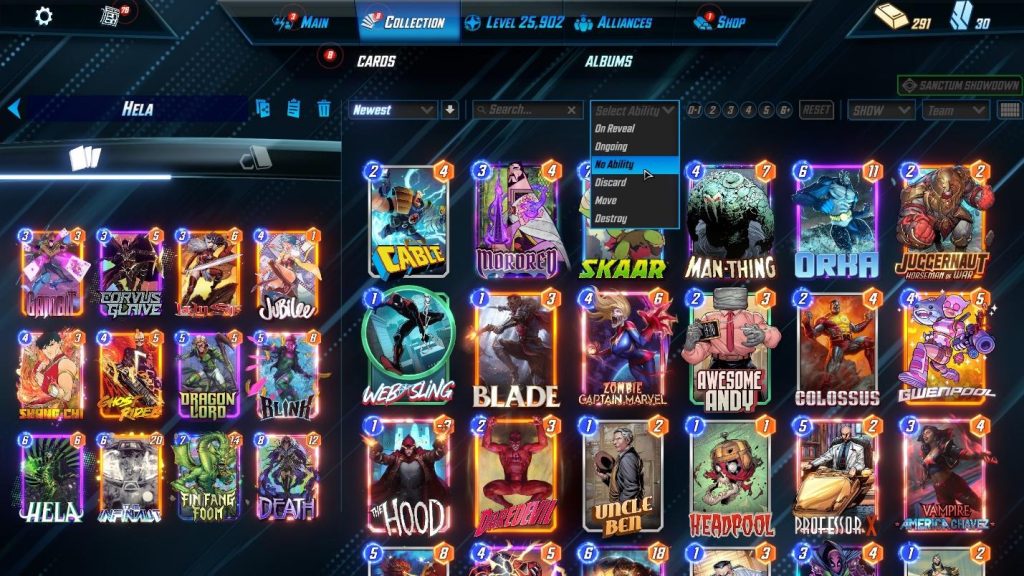
Understanding deck archetypes (Destroy, Discard, Move, etc.)
Marvel Snap has different archetypes you can play, each with its own requirements, core cards and nuances to learn.
• A staple is Destroy, where you sacrifice your own cards with Venom, Carnage and others to build up power for Knull.
• Bounce involves returning your low-cost cards to your hand and replaying them, while also buffing them with certain cards.
• Move is exactly what it sounds like: an archetype where you use cards to move other cards around, helping you create big power swings between locations.
• Discard is unique because it involves discarding cards from your hand to power up Dracula or Apocalypse. Those discarded cards can sometimes be returned to your hand or the board with a card like Hela.
• Ongoing is an archetype where you focus on Ongoing cards in your deck and try to make the most of their abilities.
• Clog is also self-explanatory: you use cards that fill up your opponent’s side of the board so they can’t play other cards.
• Ramp/Galactus is another great archetype, where your focus is on gaining extra energy quickly so you can play Galactus and win the game.
• High Evolutionary is another great archetype that unlocks hidden abilities for cards without text.
• Arishem gives you 1 extra energy from the beginning, opening up some great new opportunities.
• Zoo is an archetype where you use low-cost cards that you can boost with various effects.
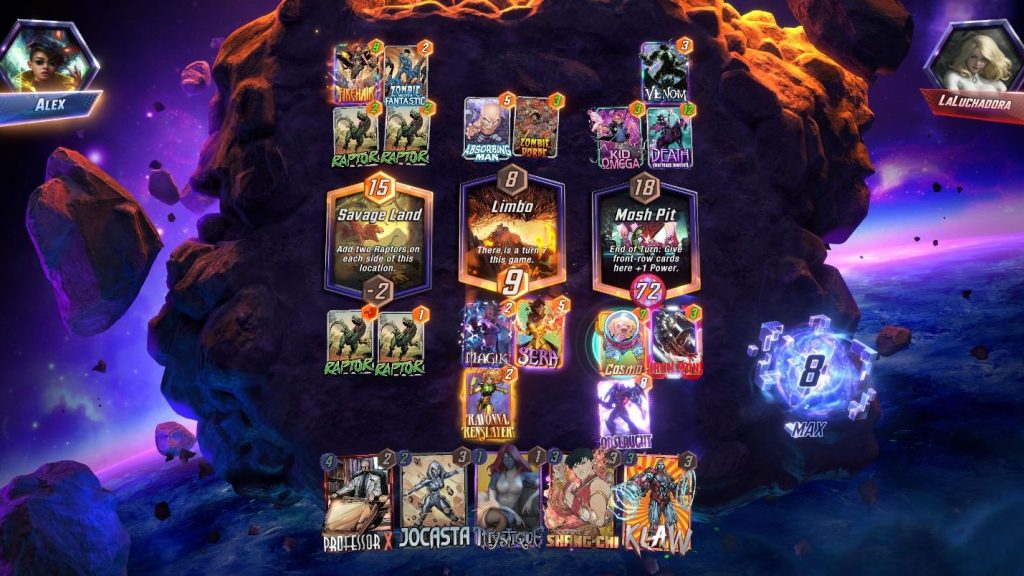
Choosing cards that work well together
When building Marvel Snap decks, the focus should be on using cards that have strong synergy with one another. Here’s what you want to do:
• Start with the core cards. These are the 2–3 cards you really need in your deck.
• After that, choose cards that work well with your core cards. For example, if you choose Galactus as a core card, you’ll need cards like Electro and Wave to help you play Galactus as quickly as possible.
• Ideally, you want a good balance between low-cost and high-cost cards. That way, you’ll be able to play a card every turn, unless your chosen archetype calls for a different strategy.
• Then test your deck against real players. Testing helps you figure out which cards aren’t ideal for your deck. As you play, you’ll begin to spot weaknesses and identify cards that might make good replacements.
Balancing low-cost and high-cost cards
Even if you have a low collection level in Marvel Snap, such as level 3, you still have plenty of cards to play with. The idea is to balance low-cost and high-cost cards as well as you can. You want to have a card to play every turn, unless your strategy involves saving energy with Sunspot, for example. A good balance can help you avoid problems and achieve better results, since you’ll have complementary cards to respond to your opponent.
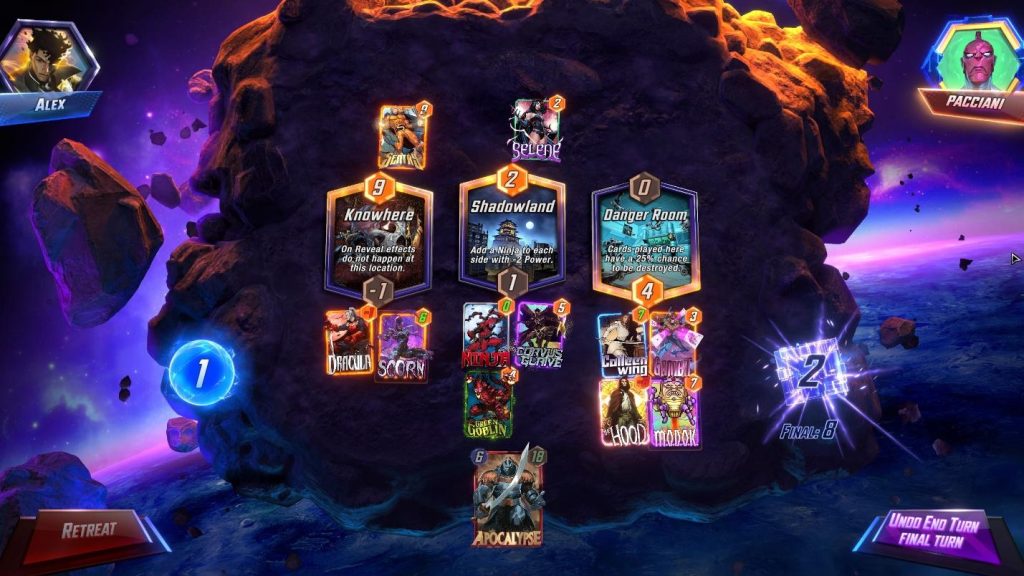
Common deck-building mistakes to avoid
• Many players tend to change their deck after every loss. Don’t do that. Instead, use the deck for 10–20 matches and see which cards aren’t working well. Then you can make changes from there.
• Ignoring card interactions is an obvious mistake. The best decks have cards that complement one another. Focusing on an archetype, for example, is an excellent approach that can help a lot.
• Having too many cards that rely on one another can also be a problem. You might end up waiting for a card that never arrives.
• Overvaluing power is another issue, because you also need to consider a card’s effect and limitations. A card like Giganto might have a lot of power, but the restriction of only being playable at the left location is quite significant.
• Don’t rush to play everything. It’s important to think through the possibilities, especially as you approach the end of the match.
• Some players forget to snap, and that’s a mistake. Cubes determine your rank, so if you’re very confident you’ll win, snapping is extremely important.
Conclusion
Ultimately, your focus should be on experimenting with decks and figuring out which gameplay mechanics suit your style. Some decks are very fast-paced, others rely on the same mechanic each time, and others allow for more creativity. The idea is to find the playstyle you enjoy and gradually improve your deck as you play. Marvel Snap is at its best when you experiment with your cards and build a powerful deck. However, every deck has counters, and that’s what keeps the game balanced
Reader discussion
Questions, ideas and thoughtful feedback are welcome.