Developed by Nathanael Gill, Medieval Ages is a new mobile strategy game that draws inspiration from classic real-time strategy titles. Having recently downloaded the game on iOS, I decided to put it to the test and see how it compares.
First Impressions
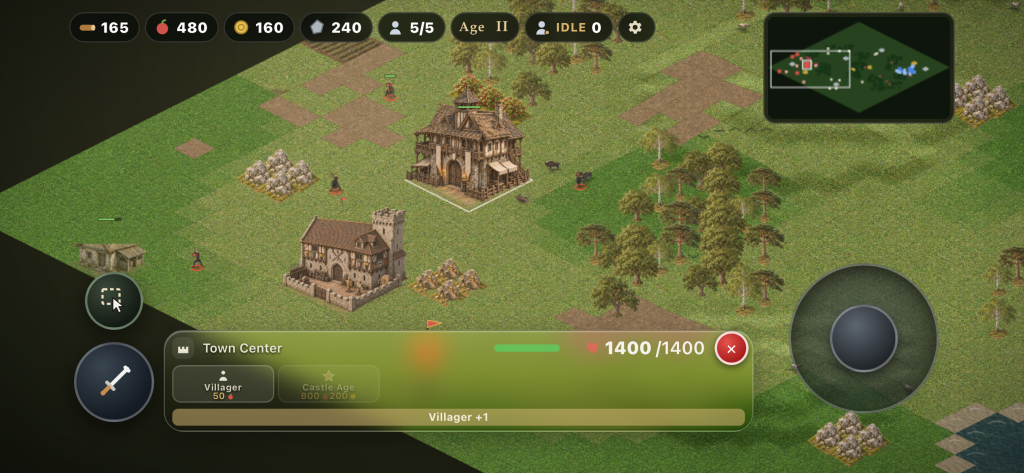
From the outset, Medieval Ages bears a striking resemblance to the iconic Age of Empires series, both in its visual presentation and gameplay mechanics. Fans of the classic franchise will immediately recognise the familiar approach to resource management, settlement building and military strategy. Its nostalgic aesthetic is certainly one of its initial attractions, particularly for those who enjoy traditional real-time strategy (RTS) games.
Game Modes and Campaigns
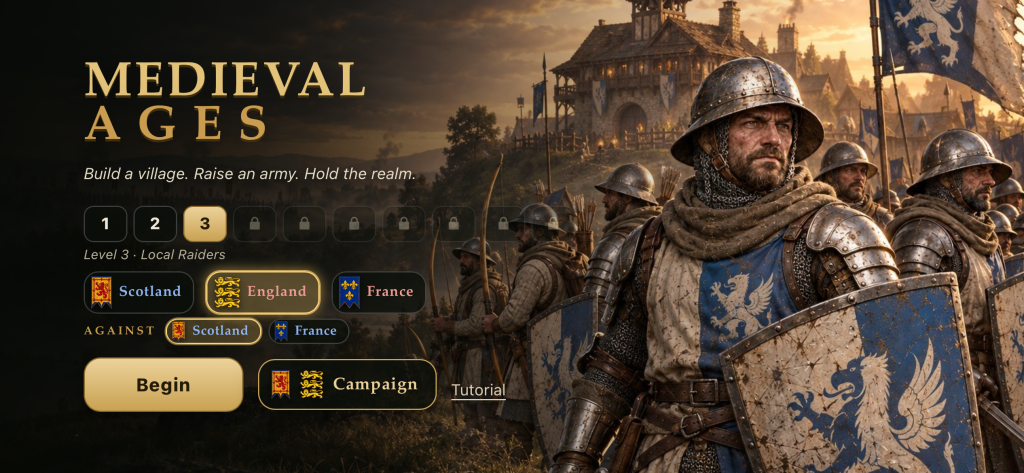
Medieval Ages offers players ten individual levels, alongside two historically inspired campaigns. Players can take control of one of three medieval kingdoms — England, Scotland or France — and select which of the remaining factions they wish to face in battle.
For those looking for a more historically focused experience, the game features two campaigns based on significant conflicts from medieval European history.
The Hundred Years’ War campaign consists of four battles: Crécy, Poitiers, Agincourt and Formigny. Meanwhile, The Scottish Wars of Independence campaign features three famous encounters: Falkirk, Stirling Bridge and Bannockburn.
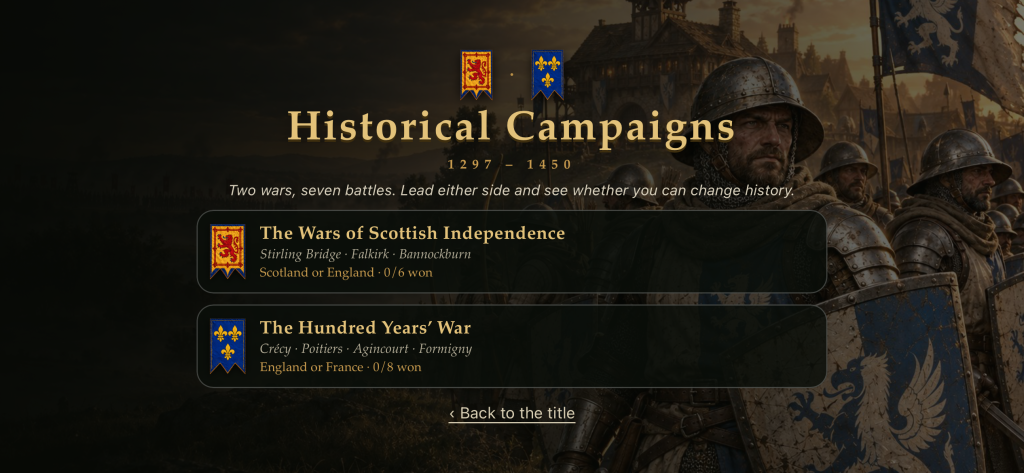
These campaigns provide an interesting historical backdrop, allowing players to command medieval armies and attempt to change the course of history.
Gameplay and Mechanics
For my first playthrough, I opted to tackle the ten individual levels, taking command of England.
The opening levels are relatively straightforward and serve as a useful introduction to the game’s core mechanics. However, despite their apparent simplicity, there is still a learning curve when it comes to managing resources, expanding settlements and recruiting troops effectively.
The first few levels don’t require you to upgrade your town into the second age. Recruiting a handful of soldiers will be enough to stave off any attacks and even complete the level, so don’t invest too much time in getting the hang of the mechanics.
At its core, Medieval Ages follows a familiar RTS formula. Each match begins with a town hall and a small number of villagers, who are responsible for gathering the resources needed to develop your settlement.
From there, players must decide how best to expand their economy and military capabilities. Recruiting additional villagers helps accelerate resource collection, while constructing new buildings unlocks further opportunities for growth.
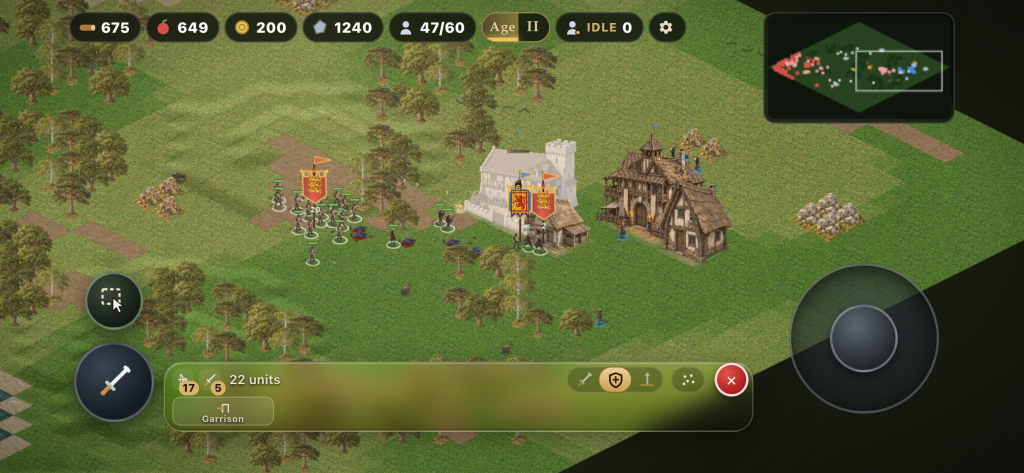
Barracks allow players to recruit soldiers and establish an army, while farms, markets and houses contribute to the development of a thriving settlement. Balancing economic expansion with military production is essential, particularly as the opposing faction begins to establish its own forces.
The ultimate objective is simple: build an army, defeat your opponent’s forces and destroy their town hall.
Controls and Performance
One of the more impressive aspects of Medieval Ages is its control system. Translating traditional RTS mechanics to a touchscreen can be challenging, but the game generally handles this transition well.
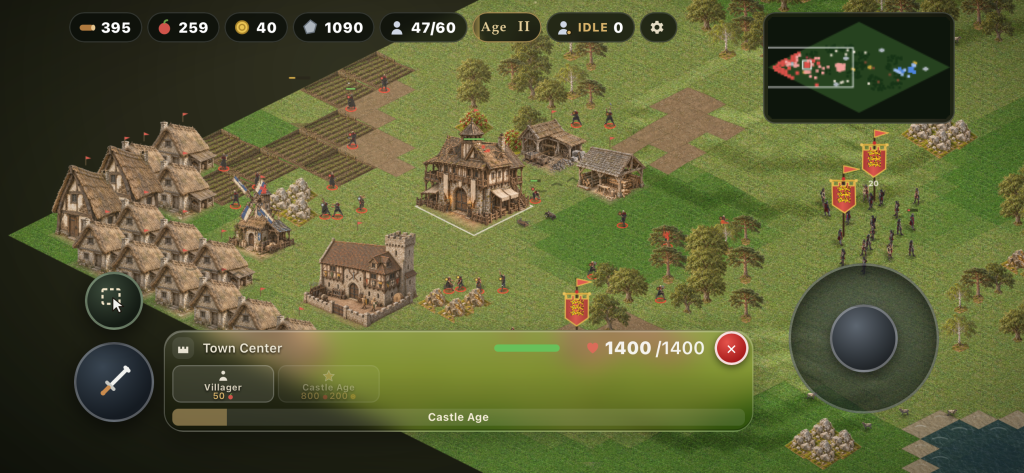
The controls feel fluid and responsive, while the ability to zoom in and out of the battlefield is particularly useful. This makes it easier to navigate settlements, select individual buildings and command units without feeling overly restricted by the smaller screen.
However, performance is not always consistent. When the battlefield becomes particularly busy, with numerous units and activities taking place simultaneously, the game did suffer from bouts of noticeable lag.
While this does not necessarily detract from the overall experience, it can become frustrating during more demanding encounters, especially when quick decisions and precise unit management are required.
Graphics and Visual Presentation
Visually, Medieval Ages adopts a style that will feel immediately familiar to fans of classic strategy games.
The buildings are generally well designed and help establish a convincing medieval atmosphere. However, some elements of the visual presentation feel less cohesive than others.
In particular, the houses have a noticeably cartoonish appearance compared with the surrounding structures. Their exaggerated design feels somewhat out of place against the game’s otherwise traditional medieval aesthetic.
That said, Medieval Ages offers a simple yet enjoyable experience that successfully captures the charm of classic real-time strategy games. While it may lack some of the depth and polish of more established RTS titles, its familiar mechanics and straightforward gameplay make it an accessible option for casual strategy fans.
Reader discussion
Questions, ideas and thoughtful feedback are welcome.